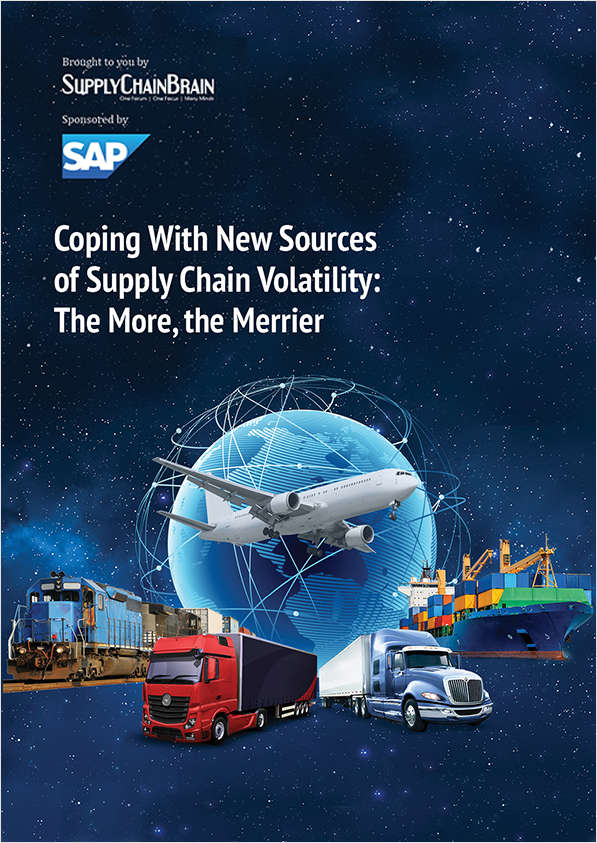
Coping With New Sources of Supply Chain Volatility: The More, the Merrier
The resilience and agility that businesses added to their supply chains with automation and optimization software during COVID-19 helped them to survive the crisis and eventually move on. The bad news: Disruption has moved on, too.
COVID focused minds and energies on managing sudden, massive supply-demand dislocation amid severe cost pressures and labor shortages. Today’s volatility is slow-simmering but constant and more nuanced: Inflation calls for cost control amid weak demand; tariff and sanction volatility require granular end-to-end visibility and rapid response capability; and sustainability compliance demands must be met. Cybersecurity involves continuous system monitoring.
Traditional linear, top-down supply chain models weren’t built for these levels of specialized complexity. Centralized planning and direction from the C-suite out to the supply and logistics partners and across siloed functions, based on internally-generated data and forecasting, is becoming unworkable; there’s simply too much essential supply chain data generated by partners, vendors and third-party providers outside the principal organization and too many variables to manage in isolation.
The full range of internal and external data must be collected, standardized and made shareable among all parties in real time, in a single, shared end-to-end view that’s always-on, shareable and actionable, for true real-time collaboration to take place. That’s the easier part; new digital tools and architectures have simplified and accelerated cleaning, structuring and harmonizing of datasets. The same goes for onboarding external stakeholders with clear permissions and less training.
Fully integrated, end-to-end orchestration is now accessible and affordable from modular platforms on a supply chain-as-a-service (SCaaS) subscription model. The larger questions involve partner selection and broader potential network advantages beyond basic platform visibility, agility and resilience.
Join two experts on supply chain networks and orchestration from SAP for a discussion of new AI-enabled tools, added capabilities and SAP’s $6.3 trillion interactive global business network marketplace.